


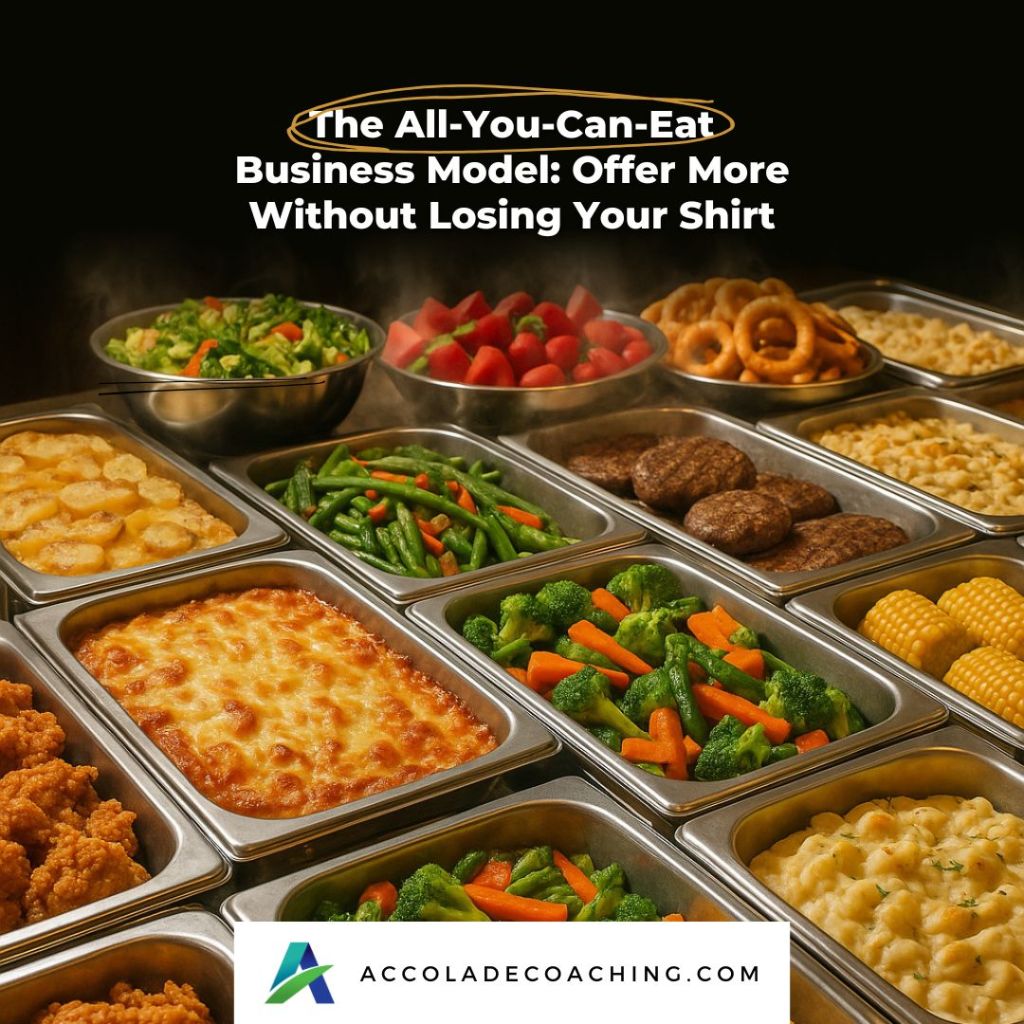
I still remember my first visit to Sizzler not long after arriving in Australia over thirty years ago. For someone new to the country, walking into a restaurant where you could eat anything and as much as you liked felt almost magical. One flat price gave you unlimited access to a salad bar piled high with choices, soups, pasta, and desserts. It wasn’t just a meal; it was an experience of abundance, a taste of freedom.
Sizzler’s model was simple: pay once, eat all you can. Its success came from a clever balance—most people ate predictably modest amounts, while the sense of “unlimited” made everyone feel like they were getting extraordinary value. But over time, costs rose, tastes changed, and what once felt generous began to feel outdated. Health-conscious diners moved toward fresher, premium experiences, and the buffet’s reputation for quantity over quality became a liability.
Today, Sizzler survives only in a few markets across Asia, but in Australia it has disappeared entirely. Its story is a reminder that “all-you-can-eat” works only when abundance still feels aspirational and when a business knows exactly how much generosity it can afford.
The success and fall of Sizzler open a wider question: how did the “all-you-can-eat” idea grow into one of the most influential business models across industries?
Table of Contents
- The Rise of the “All-You-Can-Eat” Industry
- How the “All-You-Can-Eat” Model Really Works
- Beyond the Buffet: How “All-You-Can-Eat” Moved Beyond Food
- The Reality Behind “Unlimited”
- Making the “All-You-Can-Eat” Model Work
- Balancing the Winners and the Losers
The Rise of the “All-You-Can-Eat” Industry
The idea of “all you can eat” didn’t begin with Sizzler; it dates back to the early 20th century, when hotels and cruise lines introduced buffets as a way to serve large numbers of guests efficiently. What started as a practical solution to manage costs and variety quickly evolved into a marketing promise of abundance. By the 1950s, American-style buffets turned the concept into entertainment, not just dining: for one price, you could experience indulgence without restraint.
The model spread quickly because it appealed to something universal—the desire to get more value than what we paid for.
Restaurants, gyms, and later, telecoms and software companies all adapted the same idea: remove the meter, give customers freedom, and charge a predictable fee. It wasn’t just about food anymore. The “all-you-can-eat” approach became a mindset, a way to make customers feel empowered and in control, while businesses gained loyalty through simplicity.
At its heart, the model thrives on perception. Customers believe they’re winning, while the business quietly bets on averages—most people consume less than they think they will. It’s this dance between freedom and discipline that turned the “all-you-can-eat” concept into one of the most enduring pricing philosophies in modern commerce.
To understand why this idea continues to thrive, we first need to look at how it truly works, especially in its original form, the food business.
How the “All-You-Can-Eat” Model Really Works
Behind the trays of endless food and the promise of limitless choice, the “all-you-can-eat” model runs on careful calculation. It gives the illusion of abundance while operating on tight margins and predictable averages. For every diner who piles their plate high, there are several who eat far less than they imagined they would. The restaurant’s success depends on these averages on knowing that the cost of food consumed will stay comfortably below the flat price paid.
The economics are simple but delicate. The buffet’s fixed price covers not only ingredients but also staff, rent, and overhead. To stay profitable, operators use items that are inexpensive to produce, easy to prepare in bulk, and filling—salads, pasta, bread, rice. More costly proteins like steak or seafood are portioned, served by staff, or offered as add-ons to nudge the average spend higher. In short, what appears as unlimited freedom to the customer is actually a tightly managed system of controlled generosity.
The beauty of this model lies in perception. Diners feel empowered by choice and abundance, even though every aspect—from plate size to lighting and food layout—is designed to shape behavior and limit waste. Success depends not on how much food is served, but on how satisfied people feel when they leave. The moment abundance feels cheap, or costs spiral beyond control, the model begins to crumble.
The same principles that keep a buffet alive (cost control, psychology, and perceived freedom) are now quietly shaping industries far beyond food.
Beyond the Buffet: How “All-You-Can-Eat” Moved Beyond Food
The logic of “all you can eat” quietly escaped the restaurant long ago. What began as a way to fill stomachs became a way to fill needs, whether for entertainment, connection, or convenience. The same principle of paying once for perceived freedom has shaped industries far beyond dining, turning into one of the most influential pricing philosophies of the modern economy.
Software-as-a-Service (SaaS) companies were among the first to adopt it successfully. Netflix and Spotify replaced pay-per-item models with unlimited access for a fixed fee. You no longer bought a movie or a song; you subscribed to the buffet. The trick was that digital goods have near-zero marginal cost. Once built or licensed, serving an additional user costs almost nothing, allowing companies to promise abundance while keeping costs stable.
But the model also appears in places less obvious. Fitness centers offer unlimited classes for a monthly fee, betting that most members won’t show up every day. Co-working spaces provide “unlimited access” memberships even though desks are shared and capacity is finite. In creative services, agencies and freelancers now sell “unlimited design” or “unlimited copywriting” packages with hidden boundaries like queue systems or turnaround times. Even telecommunications and data plans sell “unlimited” packages until you hit the fair use threshold.
Across all of these industries, the promise remains the same: remove the anxiety of counting, give customers the comfort of control, and build loyalty through simplicity.
Yet beneath that comfort lies the same delicate balance Sizzler once faced: how to offer abundance without being consumed by it.
This leads to the uncomfortable truth every unlimited model must face: the promise of “all you can eat” is never as limitless as it sounds.
The Reality Behind “Unlimited”
For all its appeal, the “all-you-can-eat” or “unlimited” promise has hard limits—economic, operational, and psychological. What sounds simple to the customer often hides an intricate balancing act for the business. Every industry that adopts this model eventually learns the same truth: unlimited is never truly unlimited.
In the digital world, SaaS companies discovered this first. When Netflix launched, it seemed revolutionary—unrestricted streaming for a fixed fee. But over time, costs of content licensing, bandwidth, and competition forced it to introduce limits in subtler ways. Shows were rotated out, regions had restricted libraries, and higher-quality streams came with premium tiers. The illusion of abundance remained, but the business quietly reshaped it into a controlled ecosystem.
Telecom providers have done the same for years. Their “unlimited data” plans are unlimited only until customers reach a “fair use” threshold, after which speeds are throttled. The psychology works because customers rarely hit the cap, but the cap protects the company’s margins.
In service-based businesses, the cracks are more visible. Agencies promising “unlimited design” or “unlimited content” rely on workflow systems that allow one active request at a time, or fixed turnaround windows. They deliver predictability, not infinite work. What customers are really buying is peace of mind (the ability to request without worrying about cost), not endless production.
Even physical access models face this reality. Gyms offering unlimited memberships count on most members visiting only a few times a month. Airlines sell “all-you-can-fly” passes with blackout dates and capacity restrictions. The same playbook repeats everywhere: create perceived freedom, manage actual consumption, and make sure your average user subsidizes your heavy ones.
The genius and the danger of the unlimited model lies in this tension between promise and control. It can build trust, loyalty, and scale when managed well. But when costs rise faster than averages, or when customers start to test the boundaries, the illusion begins to break. What makes it work isn’t the abundance itself; it’s the discipline that quietly holds that abundance in place.
So how do businesses manage this balance, offering “all you can eat” value without losing control? The answer lies in deliberate design.
Making the “All-You-Can-Eat” Model Work
For a business built on the promise of abundance to survive, generosity must be engineered, not improvised. The success of an “all-you-can-eat” model depends less on how much you offer and more on how you design the limits behind the illusion of no limits. Whether it’s a gym, software platform, or creative agency, these strategies keep the model profitable and sustainable.
- Design Around Predictable Averages – The economics depend on knowing your customer’s typical consumption pattern. Use data—how often they log in, order, attend, or request—to predict usage. The model only works if your average customer consumes less than your capacity allows.
- Keep Marginal Costs Near Zero – Unlimited offers are safest when additional usage doesn’t cost much to deliver. Digital products, automation, and self-service systems turn variable costs into fixed ones, protecting margins even when customers use more than expected.
- Build Invisible Boundaries – True “unlimited” access is rarely sustainable. Set fair-use policies, queue systems, or time-based limits, but frame them as operational norms rather than restrictions. Customers should feel free, even when they aren’t completely.
- Offer Abundance in Perception, Not in Quantity – Customers buy the feeling of freedom more than the actual volume of service. The goal is to make them feel unrestricted, not to let them consume endlessly. For example, gyms highlight 24/7 access, even though few members ever use it.
- Segment Users Early – Heavy users will always appear. Create premium tiers or enterprise versions to move them into higher-value plans, maintaining fairness for average users and stability for your cost base.
- Automate or Batch the Workload – In service businesses, use systems that manage requests in batches or queues. This keeps “unlimited” offers from overwhelming teams while still delivering predictable value.
- Refresh the Perceived Value Constantly – Abundance loses appeal if it feels stagnant. Rotate features, add seasonal perks, or introduce new experiences so customers continue to feel they’re getting more than they pay for.
- Watch the Early Warning Signs – Rising fulfillment costs, declining margins, or user abuse are signs your promise is stretching too far. Adjust quietly—change plan names, redefine boundaries, or restructure pricing before the illusion breaks.
When executed thoughtfully, the “all-you-can-eat” model becomes more than a pricing tactic—it becomes a trust strategy. Customers stay not because they use everything, but because they believe they could. The balance lies in keeping that belief alive while keeping your operations grounded in discipline and design.
Ultimately, success in this model comes down to one quiet but critical art: balancing the winners and the losers.
Balancing the Winners and the Losers
Every “all-you-can-eat” business lives between two extremes: the customers who use far more than they pay for, and those who use far less. The first group can quietly erode your margins; the second can feel short-changed if they don’t extract the same value as others. Making the model work isn’t about eliminating these differences but managing them with design and empathy.
The heavy users (the “winners” in the customer’s eyes) should never push the business into loss. Smart operators anticipate them, bake their cost into the averages, and set subtle controls that make overuse sustainable. It’s a test of discipline, not generosity.
On the other side, the light users (the ones who might feel like they’re not getting their money’s worth) must never feel like losers. Their satisfaction depends not on how much they consume, but on how much freedom they feel they have to consume. The moment that freedom feels limited, the emotional value collapses.
In truth, a successful “all-you-can-eat” model isn’t built on equality; it’s built on equilibrium. Some will take more, some less, and that’s precisely what keeps it balanced. The art lies in designing an experience where both sides walk away believing they’ve won.