

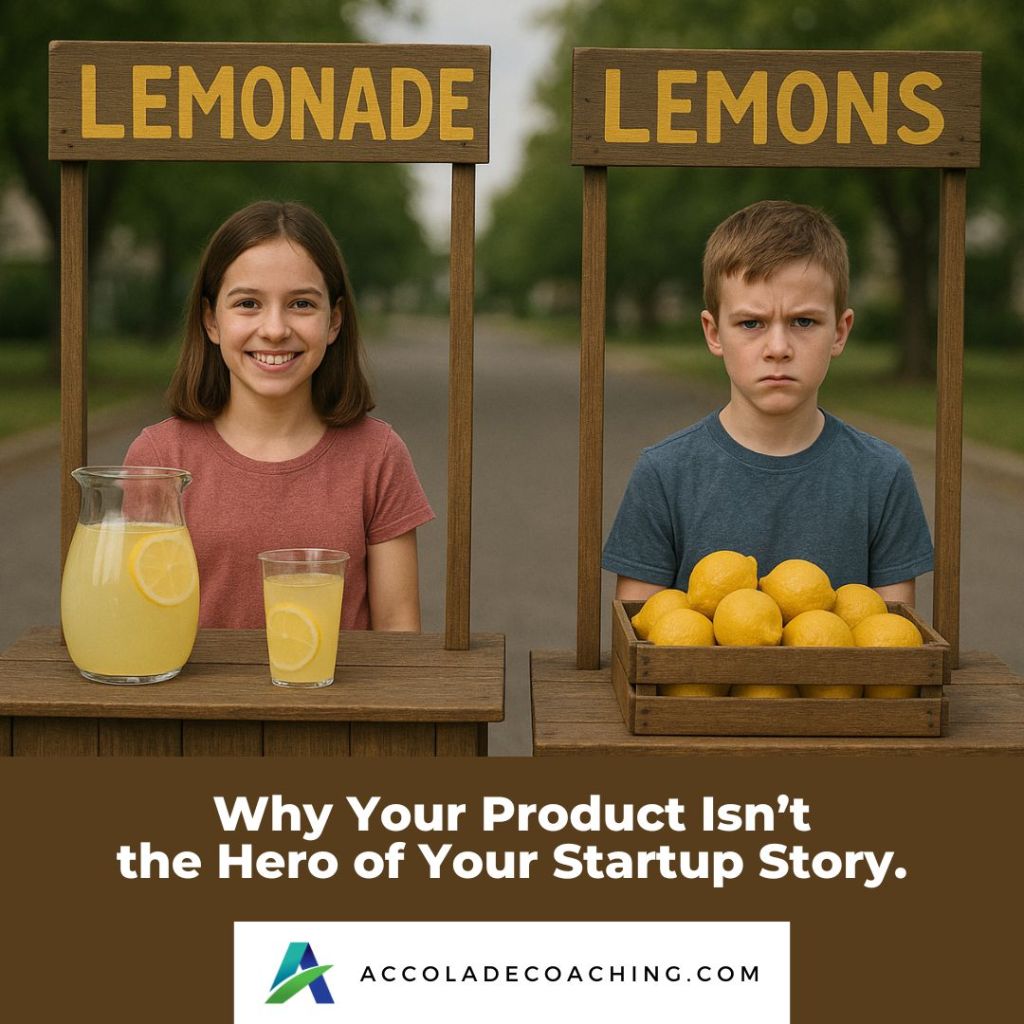
“Don’t sell lemons. Sell lemonade.”
You could have the best tech, the cleanest design, or the lowest price and still lose the sale. Here’s what actually makes people choose you.
Table of Contents
- Why Price Isn’t Your Best Selling Point
- The Power of Value: Pain Relievers and Gain Creators
- Real-World Example: How Value Outshines Cost
- Shift Your Thinking: From Features to Values
- Ready to Stop Competing on Price?
Why Price Isn’t Your Best Selling Point
It’s a familiar trap for many startups: launch a product, set a competitive price, and hope that customers will come pouring in. After all, if you’re the cheapest option, you’ll win, right?
Not exactly.
Competing on price is a race to the bottom. There will always be someone willing to go lower and that’s not a sustainable game for a startup trying to grow. When you make price your differentiator, you’re asking your customers to see you as a commodity. And commodities can be replaced, swapped, and forgotten.
If you want to stand out, it’s time to stop selling just the “what” and start focusing on the “why” and the “so what.”
Think about the last time you made a meaningful purchase—something that actually improved your life or solved a real frustration. Chances are, it wasn’t just the features or the price tag that convinced you. It was how that product or service made your life better.
Customers aren’t walking around looking for products. They’re looking for help. They want relief from a nagging pain, a shortcut to a goal, or a way to do something faster, better, or with less stress.
This is where startups can shine. Instead of just selling a product, focus on delivering real value. You can position your offering as a pain reliever that solves a problem your customers face, or as a gain creator that delivers a benefit they truly care about. That’s what makes your solution meaningful and compelling.
The Power of Value: Pain Relievers and Gain Creators
Let’s break it down:
- Pain Relievers: What problems does your product solve? What stress, inconvenience, or cost are you removing from your customer’s life?
- Gain Creators: How are you helping them win? Can your product and service make your customers’ work or life easier?
Both pain relievers and grain creators are essential. Successful products or services often combine pain relief with meaningful gains.
A well-crafted value proposition aligns what you offer with what your customers truly care about. When your product addresses a meaningful share of their top frustrations and desired outcomes—typically around 50 to 70 percent—you’ve reached a value proposition that resonates and drives real interest.
Real-World Example: How Value Outshines Cost
Slack
Slack is not the cheapest communication tool out there—far from it. Startups could easily choose free alternatives like email, WhatsApp, or even basic Google Chat. But Slack doesn’t position itself as “team messaging software for $8.75/month.”
Instead, it presents itself as a pain reliever for modern teams overwhelmed by scattered communication. Its tagline, “Where work happens,” speaks to that. Slack’s real value isn’t in messaging alone. It’s in reducing email overload, centralizing conversations, cutting down meeting time, and helping remote teams work faster and with more clarity.
Slack wins not because it’s the cheapest, but because it solves a real and persistent pain in a way that resonates with growing businesses. That’s the power of selling value—not just features or price.
Peloton
Peloton doesn’t market themselves as just an exercise bike company, and they certainly don’t try to be the cheapest option on the market. You can buy a basic stationary bike for much less. So why do people still choose Peloton? Because they’re not just buying equipment. They’re buying motivation, a sense of progress, and a supportive fitness community.
Peloton’s message is all about empowering people to live fit, strong, long, and happy lives. They offer expert coaching, structured programs, and a sense of belonging, all from the comfort of home. That kind of value goes far beyond price.
By focusing on what customers gain, such as confidence, consistency, and progress, Peloton makes price less relevant. And that type of value is much harder to ignore or replace.
Canva
Canva is the Australian design platform that disrupted the graphic design world.
They didn’t try to undercut Adobe on price. In fact, Adobe already offered lower-cost tools like Photoshop Elements. But Canva wasn’t selling design software. They were selling the ability to design effortlessly. Their mission is to empower the world to “design anything and publish anywhere.”
Their real value proposition? Empowerment.
Canva’s messaging is all about enabling anyone from marketers to teachers to create beautiful designs without needing a graphic designer. With templates, drag-and-drop tools, and real-time collaboration, they help users save time, build confidence, and communicate ideas clearly. This is classic Gain Creation.
Canva isn’t competing with Adobe on feature depth or technical capability. They’re offering something different: an easy way for anyone to create polished, professional designs without the steep learning curve. That’s what customers are really buying. And because they’re selling outcomes, not tools, they’re able to win loyalty even in a crowded space.
Shift Your Thinking: From Features to Values
In a crowded market, features are table stakes. Competing on price is a dead end. But if you can speak directly to your audience’s struggles and dreams, and if you can show them how you deliver real value, they’ll listen. They’ll remember. And they’ll buy.
You don’t need to be Slack, Peloton, or Canva to do this well. Learn what your customers care about, understand their frustrations and goals, and craft your message around what truly matters to them.
Here’s a practical exercise to try:
- List your product’s features.
- For each feature, ask yourself: So what?
- Keep asking “So what?” until you uncover an emotional benefit or tangible value.
Example:
- Feature: “24/7 support.”
- So what? “Customers can get help any time.”
- So what? “They feel confident and secure using our product.”
- Real value: Confidence and peace of mind
Now imagine weaving that value into your marketing message, sales pitch, landing pages, and investor conversations.
Ready to Stop Competing on Price?
If you’re a startup founder or entrepreneur who’s tired of chasing discounts and ready to build something meaningful, we’d love to work with you.
The Innovation Creator Program is designed to help you uncover real customer needs, build offers that sell based on value, and craft a business model that’s both impactful and sustainable. Join us today and learn how to stop selling products and start creating solutions that matter.