


Ever wondered why some brilliant startup ideas fizzle out while others skyrocket to success? Often, it’s not just about how bold the idea is — it’s about execution, adaptability, and truly understanding your market. If you’re building something new, this post might be the wake-up call that saves your venture.
Table of Contents
- The Top Three Reasons Startups Fail
- Three Ways to Beat the Odds
- How the Right Support Can Change the Game
The Top Three Reasons Startups Fail
CB Insights analyzed hundreds of startup failure post-mortems written by founders and investors. And while every story is unique, three common threads show up again and again:
1. Cash Dried Up
It’s a brutal but common truth: many startups simply run out of money. Whether it’s due to high burn rates, unrealistic financial projections, or difficulties attracting new investors, cash flow issues can shut a business down fast. But often, the real problem runs deeper: the business model was never built to scale. It might work on a small scale but fails to generate consistent revenue or grow profitably.
Example: Zume
Zume raised $445 million to revolutionize pizza delivery with robotic trucks that cooked pizzas en route to customers. However, the company burned through cash faster than it could generate revenue facing technical hurdles, like stopping melted cheese from sliding off its pizzas while baking in moving trucks. In 2020, Zume pivoted to sustainable packaging, but failed to secure further funding. Zume ultimately shut down in June 2023 after eight years in operation.
2. No Real Market Need
One of the most cited reasons for startup failure is building something customers don’t truly need. Founders often fall in love with their idea without deeply understanding the problem it’s meant to solve. Innovation alone doesn’t guarantee demand — success comes when your solution aligns with a real, validated customer need. Without real conversations, continuous feedback, and insight-driven design, products often miss the mark.
Example: Quibi
Example: Quibi
Launched in 2020, Quibi was a streaming platform focused on mobile-first, short-form video content. Despite raising $1.75 billion in funding, it failed to attract a significant user base and shut down just six months after launch. The core issue? A lack of market need. Consumers were already satisfied with platforms like YouTube and TikTok, rendering Quibi’s offering redundant.
3. Losing to Competitors
Some startups fail because competitors outperform them or offer a superior product experience. Others fall behind as customer expectations evolve. What worked last year might flop today. Startups that pivot, iterate, and respond to shifting customer behavior tend to thrive. Those rigidly clinging to their original plan often don’t make it.
Example: InVision
InVision, a collaborative design platform, raised multiple rounds of funding over its 13-year lifespan, including a notable $115 million Series F at a $1.9 billion valuation in 2018. But as users began to perceive that the product was no longer evolving, competitors like Figma surged ahead. In January 2024, InVision announced it would shut down its design collaboration tools by the end of the year.
Three Ways to Beat the Odds
1. Build Scalable Business Models
From day one, consider how your business will make money, grow sustainably, and remain profitable over time. That means testing different revenue streams, understanding your cost structures, and identifying channels that scale with demand. A scalable model isn’t just about growth — it’s about growing without breaking. The Business Model Canvas is a powerful tool to map, test, and refine your strategy from the ground up.
2. Validate Before You Build
Get to know your customers—what drives them, what frustrates them, and how they behave. Tools like Value Proposition Canvas and Customer Profile Mapping can help you uncover what your customers really need before you invest time and money. Test assumptions early and avoid wasting resources on ideas that won’t land. When you build based on real insights—not gut feeling—your chances of success increase dramatically.
3. Stay Agile in a Shifting Market
Markets move fast. What resonated six months ago might fall flat today. Founders who succeed are those who remain flexible, curious, and willing to adapt. Staying close to your customers, tracking market trends, and running continuous experiments help you spot shifts early and respond effectively. Being agile doesn’t mean lacking a plan — it means being ready to revise it based on real-world data. Adaptability isn’t optional; it’s essential.
How the Right Support Can Change the Game
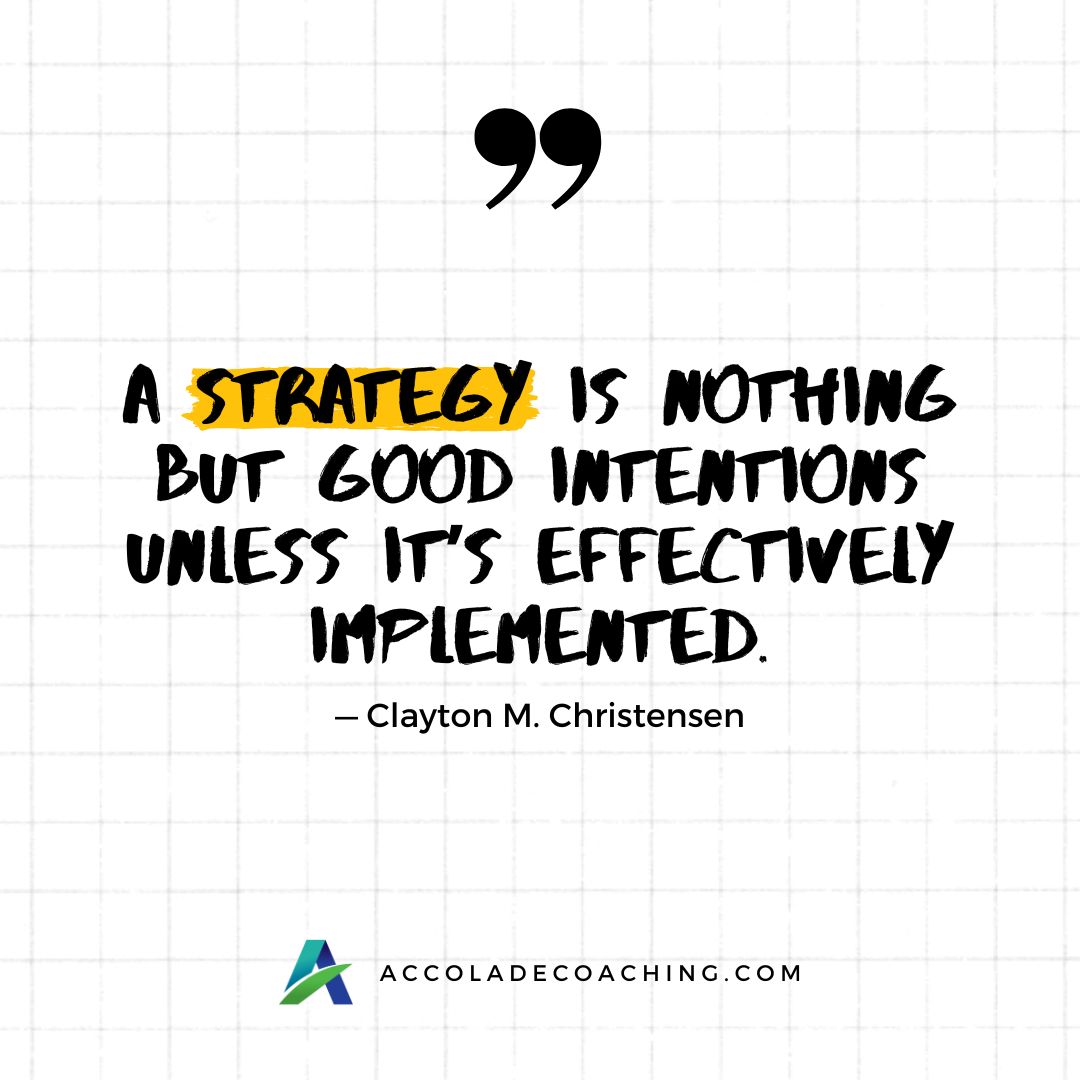
Even the best ideas won’t get far without solid execution.

As Clayton M. Christensen said,
“A strategy is nothing but good intentions unless it’s effectively implemented.”
Without a clear roadmap, structured processes, and a consistent approach to testing, learning, and adapting, even the most promising ventures can stall. Too many businesses treat innovation like a gamble—but it doesn’t have to be. With the right approach and support, innovation becomes a repeatable, reliable process.
At Accolade Coaching, we created the Innovation Creator Program, powered by Strategyzer, the global leader in business model and innovation tools. It’s designed specifically for leaders, entrepreneurs, and teams ready to innovate with confidence.
- Are you tired of relying on guesswork?
- Want to lead your startup or team with confidence?
- Ready to innovate smarter, faster, and more effectively?
👉 Explore the Innovation Creator Program and start building a business that lasts.
SF Gate
The Guardian